
State Auditor Released Audit Of UNC Asheville Procurement Card Programs
Yesterday, the Office of State Auditor released a performance audit of the University of North Carolina Asheville’s procurement card and travel card programs. After an internal audit revealed issues, the institution contacted the Office of State Auditor for a more thorough evaluation. The audit included analysis of how the University complied with established policies and procedures.
Here is the key takeaway from the Auditor’s report:
“OSA’s audit of the University of North Carolina at Asheville’s procurement card and travel card programs found the University did not consistently administer its procurement card program in accordance with the University’s requirements. Auditors identified procurement card transactions that lacked required supporting documentation, including required pre-approvals and documentation for third party lodging cost savings. Auditors also identified transactions that did not comply with the University’s purchasing requirements, including prohibited purchases.”
“By not consistently managing procurement card and travel card programs, inappropriate, unauthorized, or prohibited purchases may occur and go undetected, increasing the risk of fraud, waste, abuse, and misuse of school resources. OSA made several recommendations for the University of North Carolina at Asheville to take to improve oversight and compliance with program requirements.”
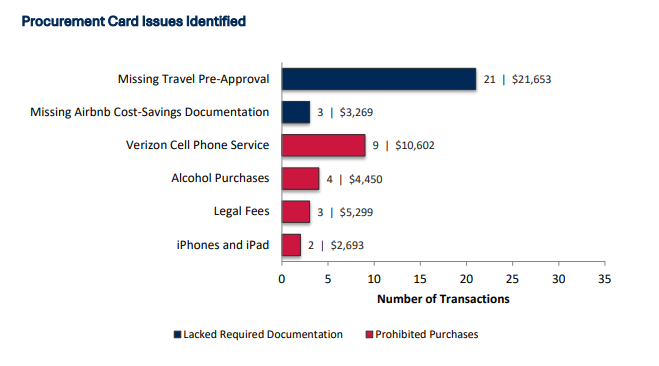
Here are the recommendations from the Office of the State Auditor:
Strengthen monitoring controls over procurement card transactions to ensure required documentation is obtained, reviewed, and retained in accordance with University policies and procedures.
Provide recurring training to cardholders, reviewers, and approvers regarding documentation requirements, review responsibilities, and approval requirements.
Strengthen enforcement of card usage requirements by ensuring reviewers and approvers verify compliance with University policies and procedures before approving transactions.
Establish procedures to identify, investigate, and address noncompliant transactions and take appropriate corrective action when violations are identified.
